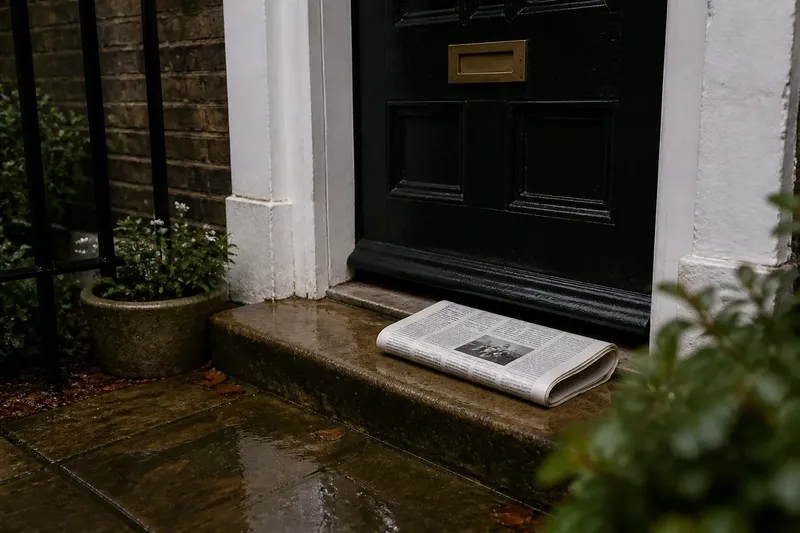
A Gentle Catch-Up After Time Away
A gentle catch-up after time away helps you spot current developments, choose relevant reports and return to the news without clearing every missed edition.

A gentle catch-up after time away works best when you set a clear boundary: find what has changed, then follow only the details that matter to you. A recent news briefing, newspaper front page or broadcaster’s summary can provide that first orientation without turning missed editions into a queue.
The pause may have lasted a weekend or much longer. You do not need to reconstruct every bulletin; aim to recognise continuing issues, new developments and any consequences for your work, community or immediate plans.
Choose a starting format
Pick a format you can take in comfortably. A newspaper front page offers a visual scan, an email briefing selects a handful of stories, and a broadcaster’s summary may suit you better if listening is easier than reading.
Start with one outlet and one edition. Switching between several summaries can make the same major event feel like a list of separate demands, while a single briefing lets you decide what deserves a closer look.
Check that the page or programme has a clear publication date and points towards fuller reporting. If your first encounter is an alert, opinion column or social-media post, move to the outlet’s main news page or scheduled bulletin for a broader view.
Choose a format you can finish without rushing.
Set a useful time boundary
Let the present situation decide how far back to look. After a short absence, a current briefing may explain what has changed; after a longer one, a recent weekly review can establish the broad outline before you check current reports.
Do not work through an archive issue by issue. Older coverage can help explain a specific development, but it may also describe circumstances that have since changed. Open it when a current report leaves a question that the background can answer.
For a developing story, read the latest report first and use its update notes or links to trace only the relevant earlier decision. That keeps the sequence clear: what is happening now, what led to it, and what remains unresolved.
Let the current situation set the boundary, not your unread count.
Recognise meaningful changes
A development deserves attention when it changes a situation or helps explain a decision people now face. That might be a new public-service arrangement, a court ruling, an election result or a local incident; the practical effect matters more than the label attached to it.
As you scan, ask what is new, what has changed since the last report and what remains uncertain. A dramatic headline may refer to a long-running dispute, while a plain update may tell you that a familiar issue has reached a consequential point.
Keep location in view. A national announcement may affect local services, and a local report may explain a broader change in transport or housing. If the connection is unclear, look for a relevant council notice or local newsroom report.
Notice consequences and changes, not just volume.
Follow a question
Choose a story when a fuller account could help you understand a decision, respond to a change or make sense of consequences for people or places you care about. Your reason may be practical, civic or simply a sustained interest.
Say you return after several days and see a short report about a change to bus services in your town. You open the linked local coverage, learn which routes are affected and whether the change is temporary, then stop when you have enough information to plan your journey. The result is a usable answer, not a pile of transport coverage.
If the first report leaves an important question open, look for a fuller account that identifies who made the decision, who is affected and what happens next. If another article repeats the headline without adding useful detail, leave it for now.
Choose one question you want the next report to answer.
Keep the scan manageable
Separate scanning from reading. First look at headlines, dates, summaries and section labels; then open only the reports that connect to a question you want answered.
A paper notebook, saved-reading list or browser bookmark can hold a short prompt such as “local service change—what happens next?” Clear it when the question is answered or no longer matters. Set a stopping point before you begin, such as finishing one briefing or resolving one question.
- Check the publication date; if the report is current, use it for orientation, but if it is old, find a newer update before acting on it.
- Check whether the headline links to a fuller report; if it does, open that account for context, but if it does not, move to the outlet’s main news page.
- Check whether a story affects your area; if it does, look for relevant local coverage or an official notice, but if it does not, leave it unless another clear question draws you in.
- Check whether an article names what remains uncertain; if it does, note that limit, but if it presents an early claim as settled, wait for a clearer update.
- Check whether a saved story answers your original question; if it does, remove it from the list, but if it does not, keep one specific prompt rather than adding every related link.
- Check whether you still have an immediate question when your chosen briefing ends; if you do, read one relevant report, but if you do not, close the page and return another time if needed.
A deliberate stop leaves room to return without making the first catch-up feel endless.
Handle breaking reports carefully
Early accounts can change as details emerge. Check when a report was published, whether it has been updated and whether it separates confirmed information from claims or unanswered questions.
For a consequential event, compare a later newsroom update with a relevant official notice where appropriate. The notice can clarify what an organisation has announced; reporting can explain wider context and who may be affected.
If a developing story could affect an immediate decision, use the most relevant direct channel alongside news coverage. A transport operator’s service notice, for instance, may answer a route question more directly than a general summary. Avoid passing on a claim until you can identify its source and whether the account has changed.
When is enough enough?
You are caught up enough when you can describe the main developments broadly, recognise what remains uncertain and identify anything that needs your attention. Perfect recall is not the aim; a workable sense of what has changed is.
Before stopping, ask whether you have found an immediate personal or local consequence, whether a continuing story has changed and whether one report needs a closer read. If none applies, you can finish without searching for another headline to justify the time.
Questions about catching up?
Is one news source enough?
One source can orient you after a pause, but it need not settle every question. If a report affects an important decision or leaves a material uncertainty, consult another established newsroom or a relevant primary notice.
Should I read every missed edition?
No. Missed editions are not a backlog to clear, and older reports may describe a situation that has since changed. Begin with a recent overview and return to earlier coverage only when it explains something still relevant.
What if the news feels overwhelming?
Reduce the number of inputs and make the first session shorter: choose one briefing, scan it once and open only a report tied to a clear question. Pause there and return later if you want, rather than trying to absorb every development at once.
When should I check again?
Check again when you have a reason, such as an unresolved question, an expected announcement or a practical change that could affect you. For a developing story, look for a later update instead of repeatedly refreshing the same page.
A gentle catch-up after time away is a return to the present, not an account of every day you missed. If you can name what changed and where you would look for one further answer, you have a useful place to stop.