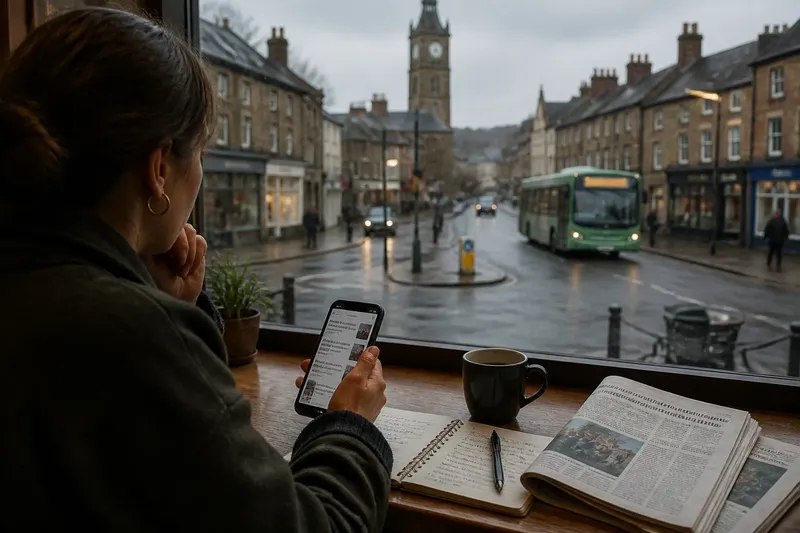
Before the Notification: News on the Doorstep
Printed news delivery turned an edition into part of the day. Trace how print timing, route design and doorstep arrival shaped the reader’s routine.
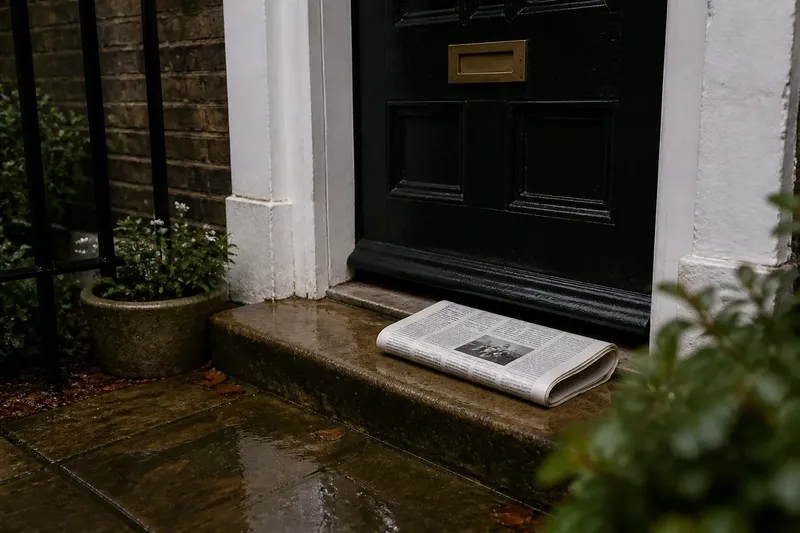
Printed news delivery made the newspaper part of the day by giving it a place, a route and an expected hour. A reader did not simply encounter a report; the edition arrived at the door, often alongside the first household tasks, and its regular appearance became a small daily appointment.
To understand how that habit formed, follow the paper from the moment an edition was prepared to the moment someone picked it up. The route mattered as much as the printed page: a late edition, a distant address or a change in delivery could alter when news became available.
The edition meets the day
A newspaper was not a single, timeless object. Printing schedules and local demand could produce editions with different closing points. An edition prepared earlier could leave more time for distribution, while a later one could include developments that had arrived close to printing. Readers received the version that could reach them along their particular route.
That trade-off gave the paper a distinct relationship with time. A morning delivery had to be printed, bundled and moved through the night or early hours. The household’s sense of “today’s news” was therefore shaped by the hour the edition was closed and the journey it still had to make.
Think of the edition as a parcel of information with a departure time. The later it left, the more current it might be, but the less room remained for getting it to the doorstep before the day began.
From print room to route
Once printed, copies had to be sorted for places and people. Local distribution might involve wholesalers, shops, carriers or a combination of routes. Bundles moved from a central point towards neighbourhoods, then separated into smaller loads for streets and individual homes.
The route was practical rather than abstract. A carrier needed to know which copies belonged on which stretch, where access was awkward, and how to keep the papers together in poor weather. A paper folded for a doorstep had to be manageable in a hand or bag, while a stack awaiting collection needed to remain sorted.
Say a carrier begins a route with one bundle for a row of houses and another for a nearby block of flats. If the building has a shared entrance, the papers may be left at a collection point rather than at each door; the observable result is a different kind of arrival, even though the edition is the same. The route’s design determines whether the paper feels personally delivered or simply made available nearby.
Why regular arrival mattered
Predictability helped turn delivery into a habit. If a paper usually appeared before breakfast, a reader could look for it while making tea, setting the table or preparing to leave. The newspaper fitted into an existing sequence of ordinary actions rather than demanding a separate appointment.
That routine also gave the physical paper a quiet presence. It might wait on a step, rest by the door or be carried inside with other post. Its arrival could be noticed before its contents were read, and the familiar weight and folded shape signalled that the day’s edition was there.
Regularity did not mean every delivery happened exactly as expected. Weather, access, staffing and transport could interrupt a route. When a paper was missing or late, the gap itself made the delivery arrangement visible: the reader had learned to expect not only the news, but also its arrival.
Choosing a delivery pattern
Printed delivery could be arranged in different ways. A subscriber might receive a paper at home, buy it from a nearby shop, or collect it from a stand on the way elsewhere. Each option placed the paper at a different point in the reader’s day.
- Home delivery: the paper comes to a chosen address and can be ready before the reader goes out.
- Shop purchase: the reader chooses a copy during an existing trip, with availability depending on the shop’s supply.
- Collection point: copies are gathered at a shared location, which can suit buildings where individual door access is difficult.
- Later edition: a copy bought after the morning may reflect a later printing and arrive through a different retail route.
These were not merely payment or convenience choices. They changed how a person encountered the paper: waiting at home, stopping on a journey, or collecting it from a known place all gave news a different rhythm.
What shaped doorstep delivery?
Why did newspapers arrive at different times?
Printing and distribution schedules differed, and routes varied in length and access. A reader near a sorting point might receive a copy before someone farther along the same delivery network.
What did an edition mean?
An edition was a version prepared for printing at a particular point in the news cycle. Its closing time affected which developments could be included before copies began their journey.
How did carriers organise a route?
Carriers grouped copies by streets, buildings or delivery areas so that each section could be handled in sequence. The arrangement had to account for addresses, entry arrangements and the practical burden of carrying the papers.
Why did readers collect papers from shops?
A shop offered an alternative for people whose routines did not suit a home delivery or who preferred to buy a copy while already out. It also made the paper’s availability depend on stock reaching that particular outlet.
Reading after arrival
Delivery shaped reading without dictating it. A paper on the doorstep could be opened at once, set aside until a meal, or carried along for later. The physical edition allowed readers to move between stories at their own pace, but the first encounter often began with the part easiest to reach: a front page, a headline or a familiar section.
The paper’s place in the home mattered too. A copy left near a chair or kitchen table could be returned to throughout the day. Unlike a delivery that arrived only when sought out, the printed edition remained visible, making the choice to read again a small, repeated possibility.
To picture the routine, imagine a household expecting a local paper before breakfast. One morning it arrives after everyone has left; the edition is still useful, but the reader’s first glance shifts from the kitchen table to the evening. The content may be unchanged, while the meaning of its timing has altered.
When the route changes
Changes to a delivery route could unsettle a habit even when the paper itself remained familiar. A moved drop point, a new carrier or a revised schedule could require readers to adjust where they looked and when they expected the copy. Small logistical changes reshaped the daily encounter.
For publishers and distributors, the doorstep was the final stage of a chain that began before readers saw the paper. For the reader, it was the most tangible one. The edition became part of a day not only through what was printed, but through the dependable passage from press to street to home.
That is the lasting lesson in the history of printed news delivery: an expected arrival can make information feel woven into ordinary time. When tracing how a newspaper reached its readers, follow the edition’s timing, the route’s last stretch and the place where the copy was first noticed.